HydraFacial Syndeo Skin-health facial
The considered workhorse facial — cleanse, extract and hydrate in one comfortable pass, with a fresh glow and usually no downtime.
Key facts
- Who you’ll see
-
- Kateryna Petliuk Head of Non-Invasive Cosmetology
- Where
- CREAMÉ, 350 Al Wasl Road, Jumeirah 1, Dubai
- Session
- 30–60 minutes
- Numbing
- Not needed
- Downtime
- Usually none
- Course
- Once a month
- Device
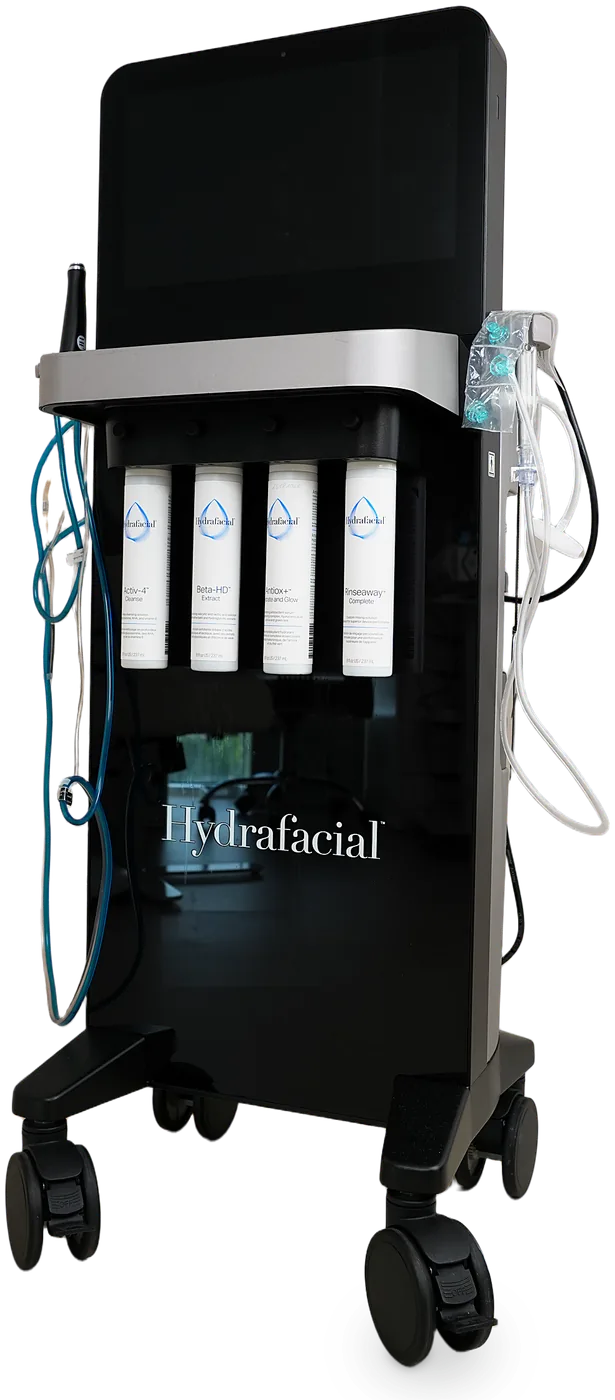
- HydraFacial Syndeo by The Beauty Health Company, USA A vortex of water and vacuum in one handpiece
HydraFacial Syndeo by The Beauty Health Company, USA
A vortex of water and vacuum in one handpiece
What the HydraFacial is for
Congestion and blackheads, dullness, dehydration, uneven texture — skin that needs a proper reset rather than another product.
Concerns it may help with
How the HydraFacial works
A spiral vortex of water and vacuum in a single handpiece: one channel lifts away dead skin, oil and debris while the other simultaneously floods the skin with serums. Three steps — cleanse and peel, extract and hydrate, fuse and protect — with boosters chosen for your skin rather than by the menu.
A session, step by step
- We start with your skin and what you'd like to change, and check your health, the medicines you take and anything your skin has reacted to before.
- Cleanse and peel: the skin is cleansed and gently exfoliated, and a light acid peel loosens dead skin.
- Extract and hydrate: the vortex of water and suction lifts oil and debris out of the pores while serums go in. It feels cool, with a light suction, and no numbing is needed.
- Fuse and protect: hydrating serums, and any boosters chosen for your skin, go on with the same handpiece. In the longer version, a session of light therapy follows.
- The essential treatment takes about thirty minutes; with boosters and light therapy, up to an hour. Sunscreen goes on before you leave.
What to expect
How it feels
Thirty minutes for the essential version, up to an hour with boosters and light therapy. Comfortable — a cool, light suction most people find genuinely relaxing.
Downtime
Usually none; some people look slightly pink for an hour or so. Skip makeup for the rest of the day if you can, keep SPF on, and don't exfoliate for 48 hours.
How many sessions
Once a month, in step with the skin's natural cycle, is the honest rhythm. Congested or marked skin sometimes starts two-weekly before settling to monthly; before an event, three to seven days ahead.
Who it may not suit
We go through your health and medicines first, because the HydraFacial may not suit you, or may need to wait, if any of these apply:
- You are pregnant or breastfeeding.
- The area has sunburn or a fresh tan.
- You have taken isotretinoin for acne in the last six months.
- You have a cold sore now, or get them often.
- You have deep, cystic acne, or a flare of eczema or psoriasis on the face.
- There is an untreated precancerous patch in the area.
- You have lupus, scleroderma or another autoimmune condition.
- You have epilepsy that light can trigger: the longer version includes light therapy.
- You react to acid peels or to skincare ingredients: tell us first, so the peel and serums can be chosen around it.
Risks and side effects
Common and short-lived: redness for an hour or so, sometimes mild swelling, and a stinging, burning, tingling or itching feeling during or after the treatment. In a small study of HydraFacial for acne, these were more frequent after the first treatment and less frequent by the last.
Less common: dryness or light peeling afterwards. With stronger suction, redness can last two to five days and bruises can appear, which is why we keep the suction gentle before an event.
Rarer, but important to know: an allergic reaction to an ingredient in a serum or booster, with itching, swelling or a rash that doesn't settle. Skincare ingredients are a common cause of allergic skin reactions on the face, so tell us about anything you have reacted to before.
Aftercare
- Sunscreen every day, SPF 50, reapplied through the day: the outer layer of the skin is thinner for a while after the treatment, and the Dubai sun is strong.
- Skip make-up for the rest of the day if you can.
- No scrubs or exfoliating acids for 48 hours.
- If your skin feels dry or tight, a plain moisturiser is enough.
- Message us if redness lasts longer than a few days, or if itching, swelling or a rash appears.
How pricing works
We don't publish prices. The cost depends on the version of the treatment, the boosters or light therapy your skin needs, and whether you come once before an event or every month. You know the cost before you start, and we add a booster only when your skin calls for it.
Our take
The HydraFacial is maintenance, not transformation — and skin that's maintained well needs far less transforming.
This is the regular, unglamorous work that keeps results looking effortless. It won't lift, and it won't erase pigment — where your concern runs deeper, we'll say so and point you to the right room instead of adding boosters.
Questions people ask
HydraFacial or Dermadrop before a wedding or an event?
Both usually need no recovery time. A HydraFacial cleanses, extracts and hydrates, so it suits congested or dull skin: have it three to seven days before, with gentle suction so any redness has time to settle. Dermadrop is a contactless mist of actives that suits dehydrated or sensitive skin, and can be done a day or two ahead. Tell us the date and we'll plan back from it.
Does a HydraFacial help acne?
It can help mild to moderate acne. In a small study, 20 adults had six HydraFacial treatments with blue light, two weeks apart, and the share with clear or almost clear skin rose from one in five to almost two in three, as the researchers judged it. The study was small and unblinded, and one author worked for the maker. Deep, cystic acne was left out, so for it we start with a doctor's assessment instead.
Is a HydraFacial suitable for darker skin?
Usually, yes. It works with water, suction and serums, not with heat or with light aimed at pigment. A trial of HydraFacial treatments, the Syndeo among them, was designed for adults of all six skin types, and in a small imaging study that included darker skin, no one reported dark marks afterwards. The acids and suction can still irritate, so on sensitive skin we start gently.
How often should I have a HydraFacial?
Once a month is the rhythm we suggest. Studies have spaced treatments two weeks apart for acne and four weeks apart for hydration, and congested skin sometimes starts every two weeks before settling to monthly.
Can I have a HydraFacial in the Dubai summer?
Yes, if you come without sunburn or a fresh tan, and keep up sunscreen afterwards. The outer layer of the skin is thinner straight after a session: in a small imaging study, it was back to normal two weeks later.
Will a HydraFacial clear pigmentation or lift my skin?
No. It refreshes the surface: imaging after a session showed a smoother outer layer, and two weeks later no visible change in the collagen beneath. For sun spots and pigment we look at BBL HEROic, MOXI or Sylfirm X; for firmness, Volnewmer or Ultraformer MPT.
How do I choose a good clinic for a HydraFacial in Dubai?
Choose one that starts with your skin, not the menu. Ask who will do the treatment, which device is used and why each booster is added. Expect questions about your health, your medicines and anything your skin has reacted to, a plain answer when a HydraFacial isn't the right treatment, as with deep, cystic acne or pigment, and the full cost before you start. Here, it is done on the HydraFacial Syndeo, and a booster is added only when your skin calls for it.
Does your clinic do HydraFacials for men, and are the benefits and price the same as for women?
Yes. The HydraFacial is for men and women alike, with the same steps and aftercare. Men's skin tends to be thicker and oilier, and men have been reported to have larger pores, so congestion and blackheads are often where we start, and the extraction step, which lifts oil and debris out of the pores, can suit them. We don't publish prices: the cost depends on the version and the boosters your skin needs, not on whether you are a man or a woman, and you know it before you start.
Where can I get a HydraFacial in Jumeirah, and who does it?
At CREAMÉ, 350 Al Wasl Road, Jumeirah 1, open every day from 9:00 to 21:00. HydraFacials are done by our cosmetology team, led by Kateryna Petliuk, Head of Non-Invasive Cosmetology, who specialises in acne and skin restoration. The first visit starts with your skin, your health and anything it has reacted to before. Where a doctor should look first, as with deep, cystic acne, we start with a doctor's assessment instead of a facial.
How long does the glow from a HydraFacial last, and how many days until the results show?
It is short-lived, though it can show after one session. In a small imaging study, all eight people felt a difference in texture straight after a session, and the outer layer of the skin was thinner and smoother; two weeks later it was back to its usual thickness. No study has timed the glow itself, and it varies from person to person, which is why we suggest a monthly rhythm, in step with the skin's natural cycle, rather than a one-off.
Does a HydraFacial really work, and what are its benefits and side effects on the face?
It can work for what it is meant for: congestion and blackheads, dullness, dehydration and uneven texture, though the evidence comes from small studies. Side effects are usually mild and short-lived: redness for an hour or so, and stinging, tingling or itching during or after; less often dryness or light peeling, or, with stronger suction, redness for two to five days and bruising; rarely an allergic reaction to a serum or booster. It won't lift the skin or clear pigment.
What should I do before and after a HydraFacial, and what aftercare does it need?
Before: come without sunburn or a fresh tan, and tell us if you have taken isotretinoin in the last six months, get cold sores, or have reacted to a peel or skincare. After: skip make-up for the rest of the day if you can, and scrubs and exfoliating acids for 48 hours; a plain moisturiser is enough if your skin feels tight. Wear SPF 50 daily, reapplied, as the outer layer of the skin is thinner for a while. Message us if redness lasts more than a few days.
What is the HydraFacial procedure like: how long does it take, does it hurt, and what is the recovery time?
One handpiece, three steps: cleanse and peel, extract and hydrate, then fuse and protect, with boosters if your skin needs them. The essential version takes about thirty minutes, and up to an hour with boosters and light therapy. Most people find the cool, light suction comfortable, and no numbing is needed, though stinging, tingling or itching during or after is common. Recovery is usually none: some people look slightly pink for an hour or so, and redness lasts longer with stronger suction.
HydraFacial vs microneedling: which do I need, and how long after microneedling or anti-wrinkle injections can I have one?
It depends on the concern: they work at different depths. A HydraFacial cleanses, extracts and hydrates the surface, usually with no downtime. Microneedling, which we do with Sylfirm X, carries radiofrequency through fine needles for pigment, redness, scarring and early laxity, usually with a day or two of pinkness. After it, wait until your skin has settled and its few days without acids and scrubs are over, since a HydraFacial starts with an acid peel. After anti-wrinkle injections there is no set interval: we plan it with you.
HydraFacial vs an oxygen facial: what is the difference?
The main difference is contact. A HydraFacial works on the skin: a light acid peel, then a vortex of water and suction that lifts oil and debris out of the pores while serums go in. Our oxygen-based treatment, Dermadrop TDA, never touches the skin: it mists actives onto it on a stream of oxygen, with no peel or suction. Both usually need no recovery time, but make-up can go on straight after Dermadrop, while after a HydraFacial it is best left for the rest of the day.
Can I have a HydraFacial during pregnancy or while breastfeeding?
No. Pregnancy and breastfeeding are among the reasons we don't do a HydraFacial, so it waits until you have finished breastfeeding. In the meantime, keep skincare simple: a gentle cleanser, a plain moisturiser and daily sunscreen. Darker patches or breakouts that appear in pregnancy are worth showing to your obstetrician. When you are ready, tell us, and we'll plan a first session from where your skin is then.
Is a HydraFacial good or bad for oily, dry or sensitive skin?
Usually good, with adjustments. Oily, congested skin tends to suit the extraction step, which lifts oil and debris out of the pores. Dry or dehydrated skin gets hydrating serums, though dryness or light peeling afterwards is a less common side effect, so a plain moisturiser helps. Sensitive skin can react to the acid and the suction: tell us what it has reacted to before, and we start gently. If acids irritate it, Dermadrop TDA, which mists actives on without touching the skin, may suit it better.
Sources
- Storgard R, Mauricio-Lee J, Mauricio T, Zaiac M, Karnik J. Efficacy and tolerability of HydraFacial Clarifying Treatment Series in the treatment of active acne vulgaris. J Clin Aesthet Dermatol. 2022;15(12):42–46.
- Razi S, Truong TM, Khan S, Sanabria B, Rao B. Hydradermabrasion through the lens of line-field confocal optical coherence tomography. Skin Res Technol. 2024;30(4):e13684.
- A phase IV open-label trial assessing the impact on skin quality, hydration, and barrier of three (3) Hydrafacial treatments in adults of Fitzpatrick skin types I–VI. ClinicalTrials.gov NCT05932732.
- Zirwas MJ. Contact dermatitis to cosmetics. Clin Rev Allergy Immunol. 2019;56(1):119–128.
- Rahrovan S, Fanian F, Mehryan P, Humbert P, Firooz A. Male versus female skin: what dermatologists and cosmeticians should know. Int J Womens Dermatol. 2018;4(3):122–130.
Updated 27 October 2026